


Key Takeaways
- A standard eye exam takes 30 to 60 minutes for most patients.
- First visits and specialized exams can run 60 to 90 minutes.
- Pupil dilation can add up to 30 minutes and affect your ability to drive afterward.
- Contact lens fittings, diabetic exams, and glaucoma monitoring require extra testing time.
- Bringing your glasses, contacts, and a medication list helps the appointment move smoothly.
You’ve probably wondered whether to block off an hour or just squeeze a quick visit between errands. The answer depends on what the exam involves, and it’s worth knowing before you schedule.
Most standard eye exams take between 30 and 60 minutes, though your first visit or a more specialized exam can run 60 to 90 minutes. Knowing what adds time helps you plan your day without any surprises. EyeWorks Madison offers comprehensive eye exams for patients of all ages, so our team can give you a clear time estimate when you call to schedule.
What Happens During Your Eye Exam
Eye exams follow a predictable flow. Each step serves a specific purpose, and together they give the eye doctor a clear picture of both your vision and your overall eye health.
Health History and Vision Review
The exam usually starts with a short conversation. The eye doctor or a staff member will ask about your current medications, any symptoms you’ve noticed, and your family history of eye conditions. This part takes about 5 to 10 minutes, but the information shapes every decision that follows.
Vision and Eye Health Tests
Next comes the hands-on testing. You’ll read from an eye chart to check your distance vision, go through a refraction test where the eye doctor fine-tunes your prescription, and have your eye pressure measured. High eye pressure can be an early sign of glaucoma, so it’s a routine check even when nothing feels wrong.
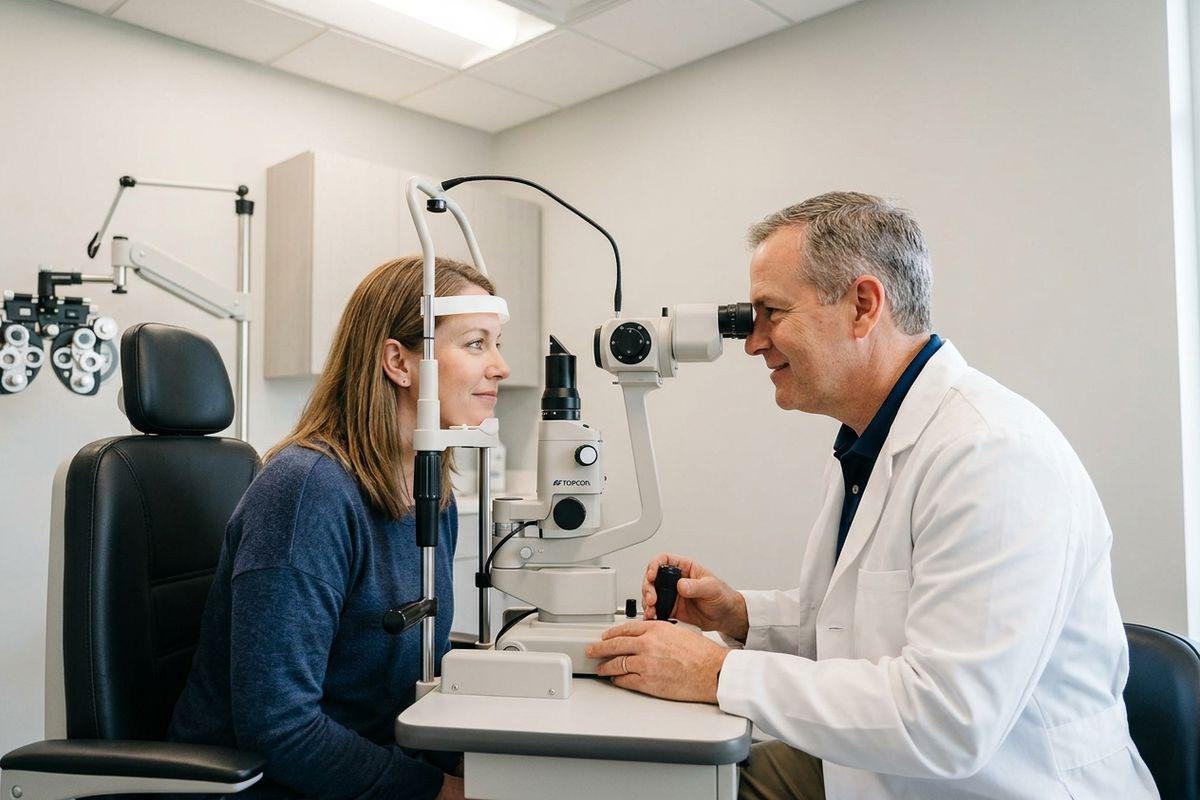
The eye doctor may also use a slit lamp, a microscope with a bright light, to examine the front and back structures of your eye. This helps spot changes in the cornea, lens, retina, and optic nerve that aren’t visible any other way. A thorough exam can also catch early signs of conditions like cataracts, macular degeneration, and diabetic eye disease, often before symptoms appear.
Factors That Can Add Time to Your Appointment
Pupil Dilation
Dilation is one of the most common reasons an exam runs longer. The eye doctor uses eye drops to widen your pupils, which allows a much clearer view of the retina and optic nerve. The drops can take up to 30 minutes to fully work, so plan for a total appointment time of 1.5 to 2 hours if dilation is on the schedule.
Not every visit includes dilation, but your eye doctor may recommend it based on your age, health history, or any symptoms you mention.
Contact Lens Fittings and Special Conditions
A contact lens fitting goes beyond a regular prescription check. The eye doctor takes measurements of your cornea’s curve and fit to find the right lens for your eye shape. That adds fitting time and, in some cases, a trial period before the final prescription is confirmed.
Diabetic eye exams and glaucoma monitoring also require extra steps. Diabetes can affect the small blood vessels in your retina, so the eye doctor may take detailed retinal images or run additional pressure tests. These are thorough by design, not just by accident.
After Dilation: What to Expect
Your eyes can stay dilated for up to 6 hours after the drops are applied. During that time, your vision may be blurry up close, and bright light can feel uncomfortable.
Avoid driving right after a dilation exam. Bring someone with you if possible, or plan to wait until your vision clears before getting behind the wheel. A pair of sunglasses makes a real difference on the walk to your car and the ride home, so toss them in your bag before you leave the house.
How to Prepare for a Smooth Appointment
A little preparation goes a long way. When you show up ready, the exam often moves faster, and the eye doctor gets more accurate information to work with.
- Bring your current glasses and contact lenses to the appointment.
- Have a list of your medications on hand, including any eye drops you use.
- Complete any new patient paperwork online before you arrive.
- Write down any vision changes or symptoms you’ve noticed, even if they seem minor.
- Pack a pair of sunglasses in case your eyes get dilated.
If you’re booking for a child, bring their school vision screening results if you have them. It gives the eye doctor a useful starting point.
Schedule Your Exam at EyeWorks Madison
EyeWorks Madison serves patients of all ages in Madison, Mississippi, from young children having their first exam to adults managing ongoing eye health conditions. Whether you need a routine prescription update, a contact lens fitting, or a diabetic eye exam, our team can walk you through exactly what to expect. Reach out today to schedule your appointment.